For many people the time before Christmas is a very stressful time. Despite the fact that we look forward to the Holidays, it comes laden with a lot more work. It is not that we don’t like the preparations for the Holidays, but it means extra work in addition to our already packed days.
Looking back on 2020, it was, and still is, an unusual year that presented us with challenges we couldn’t have imagined. We had to be extremely creative to come up with solutions for our businesses and lives. The most difficult part, we often had to do it alone. Many couldn’t–and still can’t–visit family or friends because of the pandemic.
This is how I came up with the idea for an Advent Calendar for you.
The idea took shape while preparing my son’s Christmas package. He lives in New Zealand, and our plans of spending Christmas with him got shattered. I still wanted to share some Christmas traditions with him, but how? Until we remembered a Christmas tradition in our house when he still lived with us. It can travel and stretch over the Advent Season: an Advent Calendar.
Advent Calendars
It’s an old German tradition to make the wait for Christmas Eve fun and enjoyable for kids. Starting December 1st children are allowed to open a little window on a calendar or unpack a little treat, one per day, until December 24th.
That’s exactly what I have in mind for you. A little something every day starting December 1st until December 24th. This version, though, won’t be filled with sweets and candy, sorry, but with ideas, tips, thoughts, suggestions to stay strong no matter what stress you may experience and to prepare yourself and your business for whatever challenges you may face now and in the future.
Every day, starting December 1st through December 24th, you’ll find a new post. I hope you’ll enjoy it.
I wish you a very happy, calm, and peaceful Advent season,
This year is, to say the least, unusual. I guess Thanksgiving won’t make an exception, at least for some. No traveling, no big preparations, no cooking, no big feast with family and/or friends.
It is for sure not the way I like to envision Thanksgiving.
My family’s Thanksgivings were always a little different. We moved from Germany to the U.S. some 20 years ago, meaning we don’t have any family on this side of the pond. Our Thanksgivings were always a gathering of German expatriates who, otherwise, would have spent that day alone.
I remember years in which our table barely had room for all the people. Everyone brought a typical dish from their region to share. Germany may be small compared to the U.S., but it has a lot of different regions each with its own delicious specialties. It was not uncommon that we had to make space for all the bowls, platters, and casseroles to fit on the table or at least within reach. After we were done eating, two or three hours later, we often played games. I still remember one game of Charades during which we laughed with tears streaming down our cheeks, trying to figure out the word woods.
This is what Thanksgiving is about. Seeing family or friends, celebrating with lots of good food and having a great time.
Sorry, that I have to drag you back to reality.
This year will be different for many. I, for one, and a lot of my friends decided to keep it small this year, to stay home and forgo big gatherings, big preparations, and big feasts.
Why don’t we use this year’s Thanksgiving and take a break, stop for a moment, and do something that, under normal circumstances, we wouldn’t be able to do? Take extra care of ourselves and recharge our batteries. Sleep an hour longer, read that book we have wanted to read for so long, go for a walk, listen to music, play with our kids, whatever helps you feel more energized, relaxed and, hopefully, a little bit more patient for the last couple of weeks of this year?
I wish you and your family a happy, healthy, and blessed Thanksgiving. Regine
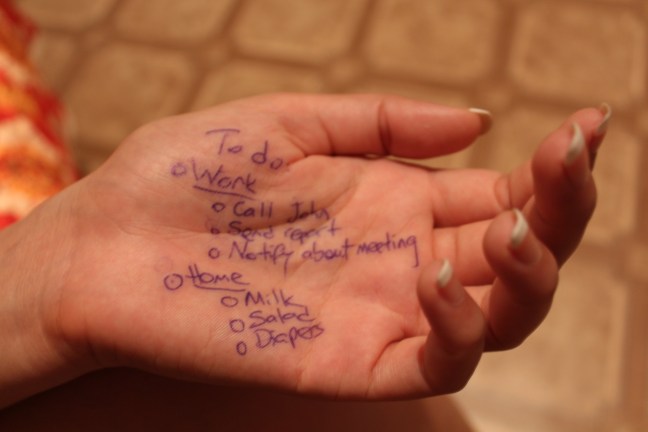
Why would anyone want to explain the difference between a to do and a project? The simple fact of the matter is, there is quite often a misconception about the two.
I’m sure you would agree that the redesign of a website is a project, a big one. But purchasing a gift for a friend… most likely not.
Let’s have a closer look at the two terms and see what qualifies as a project and what qualifies as a to do. Is the following a project or a to do? Buying a present for your best friend? The answer: it depends, and here is why.
It’s a to do if: You know exactly what to buy, where to buy it and that it’s in your budget.
It’s a project if: 1. You don’t have a clue what you want to buy and need to do some research. 2. You have to figure out where you will get what you’re looking for. 3. You don’t know if it’s in your budget.
David Allen, who created the methodology “Getting Things Done,” came up with a clear and simple distinction:
To Do: If only one action step is required to reach the desired outcome.
Project: If the desired outcome requires several action steps.
Why is this important? Because it helps you think differently about your planning and time commitment. There is a big difference between ordering something online vs. having to do some research and then moving on to the purchase. Sounds kind of obvious, doesn’t it? But that’s not necessarily the way we think about it. By not being specific about the various steps (of this little project) we tend to greatly underestimate the time it will take to get it done. Our mind deceives us. Buying a gift for our friend equals to: “not a big deal” and “done quickly.” If, however, we consider the various steps, our mind changes from “done quickly” to “it’ll take a bit of time.”
If you look at the bigger picture it can turn into a vicious cycle. Because you underestimate the time you’ll need to accomplish something you constantly feel “behind” or playing catch-up which in turn results in stress. Something we all have enough of.
If this sounds like you and you feel you’re always behind and chasing time, there are three simple steps you can take to improve your time management.
Step 1 – Make a List
Make a list of all the things you want or need to do, either on paper or electronically.
Step 2 – Note All Necessary Steps
Determine what requires only one action step to be completed and what requires two or more action steps. Note all the necessary action steps required to finish each “project.” Remember, everything that takes more than one action step is not a to do but a project.
I’ll use my example “go grocery shopping,” something everyone can relate to. Here my process before I get into the car:
Plan what I will make for dinner.
I may have to check a recipe for ingredients and add any missing ones to my shopping list.
I’ll also check what I have to restock in the fridge and/or pantry. I add these items to my shopping list as well.
Step 3 – Block Time in Your Calendar
Blocking time in the calendar. What is the best time to work on my project? Again, let’s use the project “go grocery shopping” as an example. I like to go shopping when stores are not crowded, i.e. not on weekends and not around the time school ends. Having said that, in case I’m on the road and pass a store, especially one that is a little farther away, I’ll do the shopping en route.
After all, the whole point of this exercise is to make the best use of your time and eliminate as much stress as possible.
If you have recurring action steps, keep an eye on the time for future planning. The more you learn about the time commitment for various tasks, the better for your planning. Being more conscious about your time will help you make better decisions of what to do and when to do it.
Last but not least, let’s have a quick look at some electronic task management and project management systems. You’ll find quite a few. Whichever tool you choose, keep it simple. Use tool(s) that appeal to you, that are intuitive, and fit your work style. The process is the same, but instead of writing things on paper you collect your to dos and projects with sub-tasks in a task management tool.
My repository for projects and tasks is the Microsoft To Do task manager. I find it’s intuitive and easy-to-use, and it synchronizes over all my devices (laptop, cell phone, office computer, tablet). No matter where I am, I always have my phone with me and can easily add something. This way I don’t have to worry about anything falling through the cracks. Other task managers I have used in the past were:
Now over to you. What are you doing to keep track of your to dos and projects? Do you prefer a paper list or are you more an electronic kind of person? What tools are you using? Do you have any tips? Or are you struggling to keep track of everything? Let’s talk or let me know in the comments below.
This year turned out to be quite different from what I expected. I had a really good feeling about 2020 and thought: this is my year. Like everyone else I made plans. Little did I know. COVID happened.
I started following the news diligently especially after COVID hit New York and went on a rampage in the City. Every morning I went through various news channels, each time searching for some positive change, hoping to see at least a light at the end of the tunnel.
But COVID didn’t do me the favor of disappearing (one can wish, right?). With each day and each week that COVID persisted, it got a bit more difficult to get up in the morning, I felt easily irritated, I often felt anxious. Other people were confronted with far more serious problems such as alcoholism, domestic violence, depression, child abuse, loneliness…. and that doesn’t even mention the families who lost a loved one.
So, what reason do I have to worry or to complain? I’m used to working from home, I’m used to virtual meetings. So, no change on this front. My husband works from home. That’s a big change and extremely cool because he usually travels quite a bit. My family and friends are doing fine. What else can I ask for? I should be grateful and stop whining.
And I did what a lot of people do, I pushed my worries aside. Don’t we all have a bad day or two once in a while? That’s called life, right? It’ll pass! We pull ourselves together and keep on going. Until we don’t.
Life-changing events take their toll because we’re confronted with questions to which we have no answers, yet. We are uncertain about our future, the next step, a decision in business or life… This uncertainty makes itself known in the many ways I described above. Especially if this life-changing event is ongoing and the outcome unknown, the effects can be more pronounced. Consciously or unconsciously, we are dealing with questions, worries, and feelings and appear scatterbrained and unproductive at best, and aggressive and depressed at worst.
Since such events appear mostly unexpectedly, how can we prepare for them? What can we do to stay as calm and as grounded as possible to better cope with them? How can we keep our balance and prevent extreme reactions and behaviors?
There is no one solution that fits all. Different people have different needs when it comes to finding their balance. One person may prefer loud music, whereas the other person may need quiet. One person may want to move their body, whereas the other person may need to be still. Here are some activities that I’m doing or not doing right now. Maybe you’ll find them helpful or they’ll inspire you to find your own. Here we go:
Taking a break from the news. I usually read the news every morning. I decided to skip this routine for a while to start my day on a more positive note. It worked. (I asked my husband to tell me about important events or developments so that I won’t be completely out of the loop.)
Alternatively, you could select news channels that are less sensationalistic in their reporting.
Don’t read, watch, or listen to the news before going to bed; a big game changer for me.
Exercise of the very sweaty kind. For me it’s Taekwondo. It forces me to focus on forms and technique and by doing so clears my head and gives me a break.
Gardening. A new discovery of mine and the perfect kind of work to mull over something.
Going for walks, preferably with a friend. It’s up to you what the topic of your conversation will be.
Listening to audiobooks. My way of taking my mind off of things and diving into a different world.
Alternatively, how about podcasts that are uplifting? Another favorite of mine.
In ‘urgent’ situations I try to remember to take three deep breaths. This way I avoid emotional responses that I might regret afterwards.
Yoga is a more meditative exercise and part of my daily morning routine.
Meditation or a mindfulness practice is also part of my morning routine.
At least seven hours of sleep to feel rested.
Catnaps during the day. If I feel exhausted or tired, 20 minutes of shuteye do the trick. I set a timer, but usually wake up before it goes off.
Establishing routines. Something I strongly believe in. It gives structure to my day and stability.
I journal every day and made it a habit to write down one thing that I’m grateful for. I know, this is an old hat, but if I feel down, steering my thoughts to one thing I’m grateful for lifts my mood. Try it.
A word of advice: Keep it simple. If you’d like to add a new activity to your day, don’t set the bar so high that you won’t be able to do it. 5 minutes is all it takes to make a difference. The important part is that you do it regularly.
Over to you now. What helps you relax and stay grounded especially in hectic, difficult, and/or stressful times? What is your secret weapon for coping with the big and little challenges in life? Let me know in the comments below.
Book Discussion: “Sticky Branding” by Jeremy Miller
We reached the home stretch, the last two chapters, or Principles for that matter, of the book. They are about energy and where companies with Sticky Brands get their energy from. What is necessary to break through revenue plateaus. That Sticky Brands don’t accept the status quo. And last but not least, some words of encouragement and advice.
According to Miller, companies with Sticky Brands generate energy and motivation by setting big goals, goals that are guided by their purpose and values, what he calls aspirational goals. “When a goal is just about a number, it lacks the human element to drive action.” (page 181) People can engage with aspirational goals because they have meaning, they are tangible, and they lead to a different kind of behavior. They tend to foster confidence, resulting in proactive and more action-oriented behavior. “With the right goals you can shift your brand from being average to sticky.” (page 176) Miller gives a great example and I would be amiss not to mention it. It’s Steve Jobs’s pitch to convince John Sculley from Pepsi-Cola to join Apple: “Do you want to sell sugar water for the rest of your life? Or do you want to come with me and change the world?” (page 176) You may not want to change the world, but the question remains: […] how is your company going to make a dent in the universe?” (page 176) What is your big goal that kicks your team into gear and keeps them so engaged that your customers will notice?
With such a motivated team you will inevitably grow, and so will your revenue. And that’s great. But many companies reach a certain revenue plateau and get stuck there. Miller explains why. Your team, your systems, and your approach need to change. What brought you to the current revenue level won’t be enough to get you to the next one. The most important step is, you guessed it, to determine your next big goal, a goal that has an immediate and tangible impact on your business. And then it’s all about building the infrastructure, designing the systems, and training your team to make it happen. It takes vigilance and continuous evaluation to understand what is needed, what has to change, what can be done better.
A great tool mentioned by Miller in this chapter is the SMART method. It’s an acronym and stands for: Specific, Measurable, Achievable, Relevant, Time bound. He uses some examples from the book to explain all five points. I found a great explanation on the Mind Tools website that goes into a lot of detail and explores it in a more general way. What I found very helpful on this website is the expansion of the acronym to SMARTER, the E and R standing for Evaluated and Reviewed. These two additions, Evaluate and Review, are emphasized by Miller throughout his book as being crucial. There are plenty of examples and word variations that may work better for your purposes, so feel free to choose the words that resonate with you. After all, “Big Goals [or goals in general] are only valuable if they drive action.”
Have you ever heard the saying: “If it ain’t broke, break it!” Usually it’s the opposite, but in the context of Sticky Brands it makes a lot more sense this way. According to Miller “the status quo is the enemy of a Sticky Brand.” (page 187) Because accepting the status quo would mean staying where you are, not asking what the next step will be. But that’s not how businesses strive anymore. Who would have thought at the beginning of 2020 that the world would change so drastically? How many businesses needed to pivot to keep their doors open? It only underlines what Miller says about his own experience. He had taken over the family business and struggled tremendously. More than once he asked himself if it was such a great idea to leave his lucrative corporate job. His breakthrough came because he changed direction and did something new. He had to learn that “What had worked for them (his parents) in the past was no longer applicable.” (page 191). It also led to the 12.5 Principles that we “discussed” over the past 12 weeks.
Wherever you are in your business endeavor, I’m sure you can find inspiration in Sticky Branding. Maybe you became curious and bought the book. I highly recommend it. I read it twice in short order to write my blog, and each time different aspects stood out. Here are some of my takeaways and likes:
First of all, it’s an easy read.
Clarity regarding purpose, goals, values…, you name it. Easy, right? Not necessarily. We are entrepreneurs for a reason, we have lots of ideas. Narrowing them down can be hard. But if we don’t, we run the risk of losing focus.
And since I’m talking about focus: the author’s reminder of focusing on one aspect at a time. Too often we underestimate the amount of time and/or work it takes to finish a project. We take on far too much, resulting in burnout, feeling overwhelmed, and/or not making progress.
The examples illustrating his thoughts and points.
The Exercises at the end of each Principle, serving as starting points to get my creative juices flowing.
Even if you don’t aim to create your own Sticky Brand you’ll find a lot of thought-provoking questions and ideas, many of which won’t cost you a dime.
If you got hooked and decided a Sticky Brand is what you want to create, you have a great companion with lots of encouragement along the way. Just keep the book handy. “Growing a Sticky Brand is a way of life.”
And now it is your turn. What was your favorite Principle of the book? What inspired you to make some changes in your business? As always, comments are welcome!
Book Discussion: “Sticky Branding” by Jeremy Miller
We almost made it. So, stick with me (pun intended), and we’ll pull it all together in the last part of the book. In Principle 11 we find the following headlines:
The first part of Principle 11 talks about: “Be brilliant at the basics” (page 164). It’s the not so glamorous, often invisible work that’s done behind the scenes. Think of a theatre production. Everyone working on a production has only one goal: creating a magical experience for the audience. But what we see on stage is only a minor part of the work that goes into it. Many hands are needed. Someone designing the costumes; someone building the stage set; someone ensuring that the restrooms are clean; someone cleaning the auditorium, ….
Sticky Brands pay attention to everything, even the work behind the scenes. They know and take pride in the most mundane things. Every moment counts towards a great experience.
Just imagine you had to use the bathroom in the theatre, and it was filthy? OK, the performance may have been wonderful, but, I for one, wouldn’t forget my unpleasant restroom visit.
“Sticky Brands sweat the little things.” (page 164) Even if it means cleaning the bathroom. Miller attaches this commitment and attitude to a clear purpose. “Their attention to detail is absolute, and it radiates through their products, services, hiring practices, operations, marketing, and every customer touch point.” We talked about this and the impact on company culture and employees in the previous two blogs. The focus here is more on the inner and “technical” workings of the company. Purpose fosters enthusiasm and the desire to constantly improve to better serve clients. The attitude of employees is more that of an artisan than that of a factory worker. They continuously ask the question “How can we be just a little bit better?”
I’d like to start the second point “Good is not enough” with a question: When do you brag about something? I can’t talk for you, but I brag about products or services after something unusual has happened.
Do you remember my blog about buying my Mini Cooper? I still remember talking with the sales rep about details of my car and later on sitting in the dealership going over the paperwork. Buying my Mini was a fun experience and out of the ordinary. That’s why good enough won’t work for Sticky Brands. They want to be excellent or, as many feedback forms state it, “exceed expectation. This Mini dealership certainly did. […] “you have to give your customers a reason to seek you out and choose your brand first.” And that includes sweating the little things as well.
What can you do to make your customers remember you? Pick criteria that align with your purpose and that make you unique to your customers. This way it’s not just marketing, it’s who you really are.
The next point is, if you “love your customers, they’ll love you back.” Meaning, if you give your customers your full attention they’ll notice. Miller uses an experience he had during an interview with Muldoon’s president Jimmy Muldoon. A long-time customer had a minor complaint. This is how Miller describes the situation: […] the whole tone of the company shifted on the spot. […] the office was under DEFCON 2.” (page 169) The Muldoon team pulled all information they had about this customer, talked with the service manager, called the customer service rep and attended to the customer’s concerns with the “utmost care.” (page 170)
Complaints are opportunities for improvement. […] In our business, our current customers come first […] and we make sure they are satisfied.” (page 170)
And it’s not just lip service. At the Family Business Forum in April 2013 Miller heard it first-hand. A presenter, the CEO of a large retailer of designer men’s wear in Canada, praised Muldoon’s Coffee, their quality coffee and service. He, the CEO, hadn’t intended to talk about Muldoon’s. His presentation was about successful family-owned businesses. Muldoon’s just happened to have presented earlier that day, and the CEO happened to have first-hand experience with Muldoons. So he used them as an example.
And this leads us to the next point “listen and respond.” It’s your customers who will tell you what they like or what they want. You just have to listen. It’s the perfect feedback loop and the best opportunity to learn about your customers’ needs and/or concerns. Understanding their point of view gives you valuable insights for product or service improvements. I mentioned “Muldoon’s complaint” already. Miller cites another example, the CEO of FeedBlitz who said: […] “out-servicing our clients and out-listening our competitors” is “the only way we can compete successfully against free services like Google.” (page 171) FeedBlitz’ CEO even shared that when the company was struggling with three equally viable strategic decisions they found the answer on the exhibit floor by … you guessed it, talking with their customers.
The last part of Principle 11 is about being seen as an expert in your field. I’m sure you know that this will take time and practice. Miller compares it to a craftsman and calls it the craftsman mindset.
Do you know Malcolm Gladwell and his book “Outliers”? He refers to research done by Andres Ericsson, researcher and professor of psychology at the Florida State University. According to his research it’ll take about 10,000 hours to reach mastery through deliberate practice. It also explains that deliberate practice […] entails considerable, specific, and sustained efforts to do something you can’t do well – or even at all.” (page 173)
I believe Miller emphasizes this point because “Becoming an expert is a hard and difficult road, but the process is also extremely fulfilling – it’s a source of pride.” (page 175) It takes a long-term commitment, as mentioned before approximately 10,000 hours, for your team to learn. “Do you have the purpose and pride to push your team to develop their skills and capabilities to consistently improve and serve your customers? Is your work a source of pride?” (page 175) Because if you only do it for the money, it won’t work.
Now over to you. Are you proud to serve your customers? What are you doing to sweat the basics, be better than good, show love for your customers, listen to them and have a craftsman’s mindset?
Let’s continue our adventure about “Branding from the Inside Out” and see how values influence your team members or employees. If you missed Part 1 about how to find your company’s values, just go back and read up on it.
Have you ever talked with a customer service rep and you knew from the start they couldn’t have cared less about you and your problem? And on another occasion, have you spoken with one who gave you the feeling of understanding and caring, was really nice and patient, and, yes, solved your problem? Of course, you did. That’s what the next sentence means: “A happy employee brings your brand to life.” (page 155) It doesn’t matter if you have one or one hundred employees, each one of them represents your company and your brand. Each one plays an integral part in the way your company is perceived and thus in your company’s success.
Miller writes, and I feel it’s a no-brainer, that how you treat your team members or employees impacts how they will perform. How do you interact with each other, how do you make decisions, how much freedom does everyone have, how much do you care and show empathy, and much more… Happy employees make happy colleagues which in turn leads to happy customers.
Creating a supportive environment and culture take effort and nurturing.
Based on my own experience, communication is one of the most important building blocks. As simple as it may sound, its impact is often underestimated. Conversations are not created equal. Some are fun and easy, but others can be difficult. Especially difficult conversations take trust and openness to be successful for everyone involved. But that’s a topic for another time. Staying connected and being part of the team is important, especially in times like now. What can you do or what can your team do to stay connected? Here are a couple of suggestions that, thanks to today’s technology, help us. Have a “daily team huddle to catch up and discuss projects” (page 156). Have a virtual coffee break with your colleague to discuss a problem or bounce off some ideas. Meet for a beer, glass of wine, or, if you prefer non-alcoholic beverages, some juice on Friday and end the week on a fun note. If you can, take a walk together and talk. It is (always) the little things that make the (big) difference. They show that you care about your colleagues, team members, or employees and consider them valuable and your greatest asset.
Your caring is the building block for their commitment and attitude. Didn’t I say happy employees make for happy customers? Each and every team member, colleague, or employee is an ambassador of your company and brand. Miller writes: “Your people shape your brand.” (page 159) They can be your greatest differentiator when it comes to your competition. Competing on price is never a good marketing strategy and, in some cases, extremely difficult when we think about commodity products. So where do you gain leverage over your competition? By making sure your team or employees create the difference. After all, people buy from people. Emotions are involved.
Above I mentioned two versions of a customer interaction. Miller writes about one in his book. It’s about a company that sells truck parts. In celebration of their 40th anniversary the team came up with the idea of organizing a relay race over 200 miles to the company’s headquarters supporting their philosophy that having a healthy mind and a healthy body is important. Two things happened: “It (the relay race) invigorated the passion, respect, and camaraderie of the team” (page 159) through their collective training, and it mobilized locals to participate. That in return led to a major buzz in the communities along the relay race so that local newspapers, trade magazines and the local radio station featured it. “The more active your employees are in their community, the more relationships they will form.” (page 159) And as we’ve discussed in a previous chapter, people prefer to buy from people they know and trust.
To conclude Principle 10 “Branding from the Inside Out” let’s circle back to Part 1, my previous blog, and bring it together. Purpose, values, and company culture, are the backbone of every business big or small. They define who you are, how you deal with your people, team members, employees, and consequently with your customers. They set the tone in everything you do. The clearer you are about them, the more consciously you can use them to your advantage.
I hope this blog triggered your thinking about these more subtle Sticky Brand ingredients. What’s your company’s purpose? What are your values? What’s your company culture? And most importantly, how do you use them to your advantage?
Sticky Brands have something special about them. You can feel it when you engage with them or when you buy from them. And that something are their people, their values and their culture.
Miller cites Jim Collins, author of the book “Good to Great,” who provides the perfect lead-in to this principle: “Those who build great companies understand that the ultimate throttle on growth for any company is not markets, or technology, or competition, or products. It is one thing above all others: the ability to get and keep enough of the right people.” (page 151)
He is not talking about extraordinarily talented or smart people; he is talking about people who are a great fit for your company or team. He is thinking of people who feel a connection with your company and go above and beyond in doing their job.
It doesn’t really matter how big your team or your company is. I believe we can apply this idea to even the smallest of companies and teams because each employee or team member represents your company and your brand to the outside world.
What does it take to get that kind of commitment, focus and enthusiasm (and that includes you, too)? It takes a clear definition of your purpose combined with well-defined values tied to the freedom to live and practice both.
Sticky Brands combine all three. Employees “know who they are, why they exist, and who they serve.” (page 152). And it shows. Their customers feel their confidence and commitment because all decisions are based on their purpose as well as on their values. These are their guiding principles ensuring that they stay on track and true to who they are.
It’s not enough to pay only lip service to purpose and core values. Both have to be lived and nurtured on a daily basis. They should serve as your company’s backbone. If they fail to do so, the consequences can be dire. A very sad example is Enron and its bankruptcy in 2001 that cost many people their jobs and, to make matters worse, their retirement savings.
Based on their annual report of 2000 page 29 Enron’s core values were:
Communication We have an obligation to communicate.
Respect We treat others as we would like to be treated.
Integrity We work with customers and prospects openly, honestly, and sincerely.
Excellence We are satisfied with nothing less than the very best in everything we do.
These core values sound great and may have been written with good intentions, but they lack specificity and were clearly meaningless to Enron’s leadership who tried to disguise major losses through fraudulent accounting methods causing their stocks to plummet and ultimately leading to their bankruptcy.
But let’s not stop here. Let’s now see what a good example of core values can look like. Miller used an outdoor adventure park called WildPlay as an example.
Evolve the human – Because life is not lived to fullness in a comfort zone, we exist to challenge people to evolve beyond their self-perceived limits.
Nurture the pride – We lead our mission through best-of-breed practices where no one gets hurt. Passionate about growth, we put first things first. We believe that humour is intelligent and underpins our focus on fun. Completionists, we are resourceful problem solvers, dependably driving results and we know when to let go. We are bravely vulnerable in our curiosity and creativity. Our inclusive family works as a creative and loyal team where empathy is a given. We challenge each other directly and never compromise our integrity. We seek awesomeness.
Taste the dirt – If you don’t know Mother Earth, you won’t take care of her. In our circle of influence, we grow the next generation of caretakers by establishing a sense of kinship with natural spaces. We stretch to take care of the environment in realistic ways that are achievable. Get dirty and remember the smells while you make a difference. Nothing is more primal than the elements.
Share the fruit – The labour of our business should result in an obvious and tangible benefit to our team and to our neighbors. We foster skills growth, as mentors to fellow WildPlayers and encourage each to adventure and grow. Our evangelists link us to our communities, on and off our dirt. We have a clear social purpose that we can fulfill, and through giving and participation, we show our commitment to that.
Brand Promise – We release your original human and change the course of your life through the thrill and challenge of adventure! We make it easy to decide to “Take the leap” and to have a fun and unique visit. We deliver “awesomeness” at every step along your journey with us.
Don’t you agree that these core values are far more specific and closely relate to what WildPlay is doing? I’m pretty sure that if you had asked an Enron employee, they may not even have known what their company’s core values were. But I can easily imagine that WildPlay employees know exactly what theirs are.
Miller has a great idea on how to find your company’s values. I suggest trying it out if you have problems finding yours. Instead of asking what you are, why not flip the question on its head and ask instead what you are not. Ask each team member to write seven sentences “We are not…” (page 162) preferably on a sticky note or index card and put them on a wall. In case you are a solopreneur, you can do it, as well. Either by yourself, but where is the fun in that, or with someone you believe can help you. Group the notes or cards that show similarities and focus on the columns that are the longest. Now it’s time to flip the script again. Use the negative statements and create positive ones. Use words that are meaningful to you and your team members.
I’ll give you some time to work on that and will see you next week for Part 2 of Principle 10. Until then, have fun and let me know how it went.
Book discussion “Sticky Branding” by Jeremy Miller
In my last blog about Sticky Branding, Principle 8 – “Being Everywhere,” I briefly talked about focus while building and growing your brand community. In this blog we will look more closely at how to do it effectively.
I like Miller’s analogy for introducing this chapter: “How do you eat an elephant? One bite at time.” (page 136) This analogy gives a realistic picture of what to expect when creating a Sticky Brand. “Growing a Sticky Brand is a process. It takes an enormous amount of time, resources and work to grow your company’s brand, so it stands out above the herd and has a sustainable competitive advantage. You’re not going to do that in 90 or 180 days.” (page 136) It’s a continuous process and to keep it manageable, you need to break your branding activities into topics and focus on one topic at a time. I couldn’t agree more: “There are always hundreds of things you should be doing, but what must you do?” Miller suggests using “The 3 Vs” (page 136): Volume, Velocity, and Value to determine your focus.
Volume focuses on increasing customer demand and generating sales leads.
Velocity focuses on improving your closing rate.
Value focuses on price sensitivity and perceived value.
Volume solely focuses on finding new customers and growing sales. If you’re starting out or have repositioned your business, this will most likely be your focus area. You want your phone to ring. In order to make that happen you need prospective customers to know about you, your brand, and the problem you’re solving. Your ultimate goal is to have customers calling you instead of having to reach out to them. You build your brand community because you want to reach the point where your brand is doing “…the heavy lifting” for you. (page 138)
This means your focus will be on making new connections, building new relationships, and creating brand awareness. Evaluating the effectiveness of your efforts is relatively easy. You can track inquiries per day, per week, or per month. The simpler your tracking system, the better. You want to learn what worked and what didn’t. Which marketing activity brought in new leads and which ones were dead fish in the water. This information helps you adjust your course of action. Keep in mind that most of the time a combination of marketing activities is the driver of increased sales. Don’t fall into the trap of looking at them in isolation. Rather, look at all your activities related to an event, a conference, you name it.
Velocity aims at making the buying process easier, faster, and more efficient for your customer. As a company you focus on this area to optimize your business or brand. According to Miller each customer goes through three phases before buying.
It starts with Awareness. How do your customers realize they have a need of your product or service? What stimuli, situation or event trigger the process of looking for a solution?
In the next phase – Assessment – they consider their options. What products are on the market? Are there new ways to solve their problem? What are the costs? This is when they research your company and reach out to you to get more information. It’s a critical step because they may or may not move forward based on what they learn in this phase. They may find your product or service too expensive or just not right for them.
The actual Purchase – phase three – begins after your customers make a commitment and decide to buy. This is when the actual sales process begins: negotiating, discussing, and defining contract terms, etc.
Looking at these three phases there is always room for improvement. What can you do to make it as easy as possible for your customers to move through them? What triggers their need? What information do they need to move from awareness to assessment? What information is important when researching their options? What keywords or key phrases are they searching for online? What concerns should you address in a conversation? How can you simplify the sales process?
In each of these phases you have the opportunity to win or lose your prospective customer. That’s why it is so important to make it as easy as possible for them. You can use customer feedback to gather information that will help you improve and ensure the best possible experience.
Last but not least is Value. Typical examples for perceived value and the willingness to pay a higher price are Apple, Tesla, or even your neighborhood electrician or plumber who charges more but does such excellent work that you don’t even look for alternatives. Miller uses the following analogy to describe the benefit: “It keeps your competition at bay like a moat around a castle,…” (page 142)
Let’s take Apple as an example and dig a little deeper. Apple is famous for its “Genius Bar” and tech support, the beautiful design of their products (and no, I’m not an Apple user), and the community they built. People line up in front of stores the moment a new product is released. Customers have a strong affinity toward Apple, they are loyal customers, and they don’t mind paying a premium price. Despite the fact that there are equally well designed and cheaper products on the market, Apple customers return and buy Apple products. “By prioritizing the value of your brand, you are choosing to grow a recognized brand and become the category leader.” (page 143) This example illustrates clearly what it means to increase the perceived value of your service or product.
For the Value category customer retention and higher profit margins are two relevant data points to measure. But depending on your product or service you may add other data points.
Nowadays, collecting data is simple but not necessarily always helpful. Keep it simple when deciding what data to collect and how to collect it. I love the example Miller mentioned. He had heard it at a conference. Here it goes: ”My dad could spot a budgeting problem or a turn in the economy before our accountants did, based on his daily inspections.” He would walk through his company every afternoon. If there was a truck in every loading bay it meant the business was doing well. Empty loading bays meant “tough times were coming.” (page 145)
It’s time to circle back to the headline of this chapter: Pick your Priorities. We’d all like to grow our business, make it easier for our customers and be the market leader. Since improving any of the three Vs means a lot of work, Miller recommends focusing on one V at a time. Ask the questions “What’s holding your business back at the moment? […] What does your business need to focus on…?” (page 148) What areas of your business are struggling and need your
attention in order to grow? If you have determined the area that needs fixing, set a goal, make a plan, allocate resources, and focus on this goal for the next half year. Review your progress regularly to make sure you are still on track. If you make an unexpected discovery along the way, adjust your course.
Over to you now. What area of your business needs attention? What do you need to fix or improve to take the next step? Let me know in the comments below.
Book Discussion: “Sticky Branding” by Jeremy Miller
“Sticky Brands just seem to be everywhere. They have a buzz about them that’s usually the domain of much larger companies.” But “unlike the big guys, they don’t spend outrageous amounts of money on marketing and advertising. They stand out by growing their community.” (page 121)
This concept isn’t new. In fact, Seth Godin wrote a book called “Tribes” in 2008 about community building. It is the internet that made and makes community building so much easier these days. But let’s not get ahead of ourselves and let’s take a closer look at how Miller does community building.
Let’s start with the fundamentals. According to Miller there are three layers of relationships:
Layer 1 is your Inner Circle. The Inner Circle is made up of people you have a deep relationship with, such as friends and family. Most people have between 10 and 30 such connections.
Layer 2 are your Personal Connections. They are your casual friends, acquaintances, colleagues, prospects, clients, etc. whom you meet or see on a regular basis at industry events, conferences, maybe for lunch or coffee.
Maintaining your connection with your Inner Circle and your Personal Connections takes time and effort. In other words, time is the limiting factor for how many close friends and personal connections you (or anyone else, for that matter) can have.
That’s why the third layer, the Community, is where “things start to get interesting” (page 122) because it eliminates the cap of how many people you can connect with. Others do it for you. They bring their friends and personal connections to your community if they find your blog, social media post, newsletter, you name it, interesting and relevant. It’s up to you to show off your company’s uniqueness by sharing your values, your opinions, and your vision. If we add consistency to the mix, we create the perfect opportunity to build credibility and relationships and, in doing so, support our business.
Do you remember the Lower 90% from the previous chapter? This is where your community building is kicking in. It allows you to develop a relationship with prospective customers before they need your product or service. Even community members who will never buy from you are important, because they may spread the word about you and your company or recommend you to friends and family. Whereas traditional marketing and advertising is limited by resources, building a community, especially with the help of the internet, is boundless.
Let’s add some numbers to the game of community building. According to Clay Shirky, the author of “Here Comes Everybody” and “Cognitive Surplus,” 90 percent of your audience will be “lurkers,” members who don’t participate but listen or read. Only one percent will engage and post comments, forward your articles or invite new members into the community. The remaining nine percent are curators, members who share your content through their social media platforms. To keep a conversation going and make your community interesting you need at least 10 active members. If you do the math, you’ll come to the conclusion that you’ll need an audience of at least 1000 members.
A daunting number when you start out. So, where do you find the first 1000 members? Miller says, “The first thousand members of your community come from your Personal Connections.” (page 128) They join your community […] ”because they like you, trust you, and want to support you.” (page 128) You’ll get them on board by asking them to join.
The LinkedIn Group of Sticky Brands started small, “five people to be exact” (page 128) and grew over time because Jeremy Miller and his team put time and effort into it. “We made a point of being active networkers – both online and offline.” (page 128)
Building your own brand community isn’t the only way to be “everywhere.” You can support or sponsor existing ones instead. You could reach out to industry organizations, be active in your hometown, exhibit or sponsor an event at a conference. Whatever floats your boat. The key is to find the right group(s), organization(s), or event(s) that share your company’s values and interests. There are a million opportunities.
A word of caution though. Keep in mind that, especially in the beginning, building your community takes time and effort. Focus on what you can do well and what promises the biggest impact on your business. Experiment with various approaches and check what worked and what didn’t. Expand on what was received well and change course if the result isn’t satisfactory.
There is one point, Miller emphasizes: Don’t mistake your community for a lead generating platform. Miller writes that “There is a fundamental difference between marketing and community building. Marketing is all about your company and your brand.” […] “Community building has the opposite focus: it’s not about you, it’s about everyone else.” Page 131) […] “You don’t own the community. You are a member of it.” (page 132)
I partly agree. I’m a member of a couple of groups, and most of what is shared in these groups is information, best practices, helpful tips, books etc. But a minor portion of it is about new courses, services, and products. It’s done in a manner that I find not intrusive; it feels like sharing relevant information. My point being, it is up to you where you draw the line and how you do it. “People see right through marketing-driven communities and avoid them.” (page 132) Remember, your goal is building a community by developing, nurturing, and scaling relationships. You want your members to interact with you and your brand, grow your network, and tell their friends when they need your services or product. The best way to achieve this is by being generous and sharing helpful information.
Now it’s time for you to build and grow your community. Here is a modified To-Do-List from the book. To get started:
Make a list of who you know and who you can invite to your community.
Write personalized invitations and be specific in what you want the recipient to do.
If you have exhausted your network, think outside the box about how to market your group to other networks.
Ask your community for help. Who do they know and invite to join?
And ensure that you are:
present: start conversations with your members and interact with them.
opinionated: show your personality, share your point of view, how you solve problems, and what you believe in.
generous: be proactive, help others make progress and be heard.
“everywhere”: to be more precise, be where your customers are and where you have the greatest impact.
Let me know in the comments below how it is going for you. How do you approach the topic of community building? What is your experience in starting and growing a community? What stumbling blocks did you encounter? What is your best practice advice?










 Regine Albrecht-Strategies with A Kick